
 English
 Español
 Portugues
 Pусский
 Français
 Deutsch
 日本語
日本語 한국어
한국어 العربية
 Italiano
 Nederlands
 Svenska
 Polski
 Türk dili
 हिन्दी
 Indonesia
 Melayu
 dansk
dansk Magyar
 বাংলা
বাংলা עִברִית
 čeština
 українська
 беларускі
 Filipino
 Suomalainen
 اردو
اردو հայերեն
 български
 Hrvatski
 galego
 नेपाल
नेपाल euskara
 Shqipëria
 Malagasy
 Башҡорт
 Türkmenler
 Ilocano
 Нохчийн


Electronic capacitor
Electronic Capacitor: A Fundamental Component in Modern Electronics An electronic capacitor is a passive two-terminal electrical component that stores and releases electrical energy in a circuit. It consists of two conductive plates separated by an insulating material known as a dielectric. When a voltage is applied across the plates, an electric field forms, causing positive and negative charges to accumulate on each plate. This charge separation allows the capacitor to store energy, which can later be discharged when needed. Key Characteristics of Capacitors 1. Capacitance (C): Measured in farads (F), capacitance defines a capacitor’s ability to store charge per unit voltage. Common units include microfarads (µF), nanofarads (nF), and picofarads (pF). 2. Voltage Rating: The maximum voltage a capacitor can handle without breaking down. Exceeding this can damage the dielectric. 3. Dielectric Material: Determines the capacitor’s properties. Common dielectrics include ceramic, electrolytic (aluminum or tantalum), polyester, and polypropylene. 4. Polarity: Electrolytic capacitors are polarized (must be connected correctly), while ceramic and film capacitors are non-polarized. Types of Capacitors - Ceramic Capacitors: Small, inexpensive, and widely used in high-frequency applications like decoupling and filtering. - Electrolytic Capacitors: High capacitance-to-volume ratio, ideal for power supply filtering but have limited lifespan. - Film Capacitors: Stable and reliable, used in audio circuits and power electronics. - Supercapacitors: Store much larger energy than traditional capacitors, useful in energy harvesting and backup power. Applications in Electronics Capacitors serve critical roles in: - Power Supply Filtering: Smoothing voltage fluctuations in DC circuits. - Signal Coupling/Decoupling: Blocking DC while allowing AC signals to pass. - Timing Circuits: Used with resistors to create delays (e.g., in oscillators). - Energy Storage: Temporarily powering circuits during interruptions. - Motor Starters: Providing the initial boost in single-phase motors. Advancements and Future Trends Research focuses on improving energy density, reducing size, and enhancing reliability. Innovations like solid-state capacitors and graphene-based designs promise better performance for next-gen electronics. In summary, capacitors are indispensable in modern electronics, enabling functions from noise suppression to energy storage. Their versatility and evolving technology ensure their continued importance in electronic design.
өнім
Классификация:
Capacitor
-
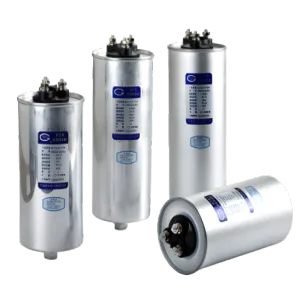
Low Voltage Shunt Power Capacitor
санат: CapacitorКөрулер: 52сериялық нөмір:босату уақыты: 2025-12-16 10:00:52Cylindrical Capacitor: Engineering Principles, Performance Factors, and Industrial Applications Industry Background and Market Demand As global industrial systems move toward higher efficiency, stability, and energy optimization, capacitors have become indispensable components in power electronics and electrical infrastructure. Among various form factors, the cylindrical capacitor has gained wide adoption in low- and medium-voltage power systems due to its compact geometry, mechanical robustness, and favorable thermal performance. Industries such as manufacturing automation, HVAC systems, elevators, renewable energy integration, and power distribution increasingly rely on reactive power compensation to improve power factor, reduce losses, and stabilize voltage. This demand is particularly strong in regions with stringent energy efficiency regulations and high penetration of inductive loads. Cylindrical designs are well suited for these environments because they balance electrical performance with installation flexibility and long-term reliability. The market trend also reflects a shift from simple capacitive components toward engineered assemblies with enhanced safety mechanisms, predictable lifetimes, and compliance with international electrical standards. In this context, cylindrical capacitors are no longer treated as commodity parts but as engineered solutions within larger power management systems. -
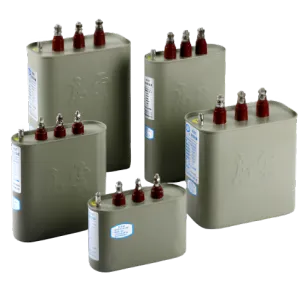
Compensation capacitor
санат: CapacitorКөрулер: 45сериялық нөмір:босату уақыты: 2025-12-18 11:50:10Industry Background and Market Demand Cylindrical capacitors are widely used passive components in modern electrical and power systems, particularly in low- and medium-voltage applications where reliability, thermal stability, and space efficiency are critical. As global industries continue to electrify equipment and optimize energy efficiency, demand for power factor correction, reactive power compensation, and stable power quality has increased across manufacturing, infrastructure, and commercial facilities. In regions such as Europe and North America, stricter energy efficiency regulations and grid standards have accelerated the adoption of capacitor-based solutions in motors, HVAC systems, elevators, pumps, and industrial automation equipment. Cylindrical capacitor designs have become especially relevant due to their mechanical robustness, consistent thermal performance, and adaptability to modular system layouts. These characteristics make them suitable for both new installations and retrofitting legacy electrical systems.
жаңалықтар
Классификация:
-
[Industry News]Capacitor Types Explained: Shunt Capacitors vs Filter Capaci...
2025-12-24 17:25:59 -
[Industry News]What Is a Shunt Capacitor and How It Improves Power Factor
2025-12-25 09:34:02
іс
Классификация:
Әзірге іздеу нәтижелері жоқ!
бейне
Классификация:
Әзірге іздеу нәтижелері жоқ!
жүктеп алу
Классификация:
Әзірге іздеу нәтижелері жоқ!
жұмысқа қабылдау
Классификация:
Әзірге іздеу нәтижелері жоқ!
Ұсынылатын өнімдер
-
NEWS
Low Voltage Shunt Power Capacitor
көбірек білу үшін



 Whatsapp
 Телефон